03 — Booklet Design
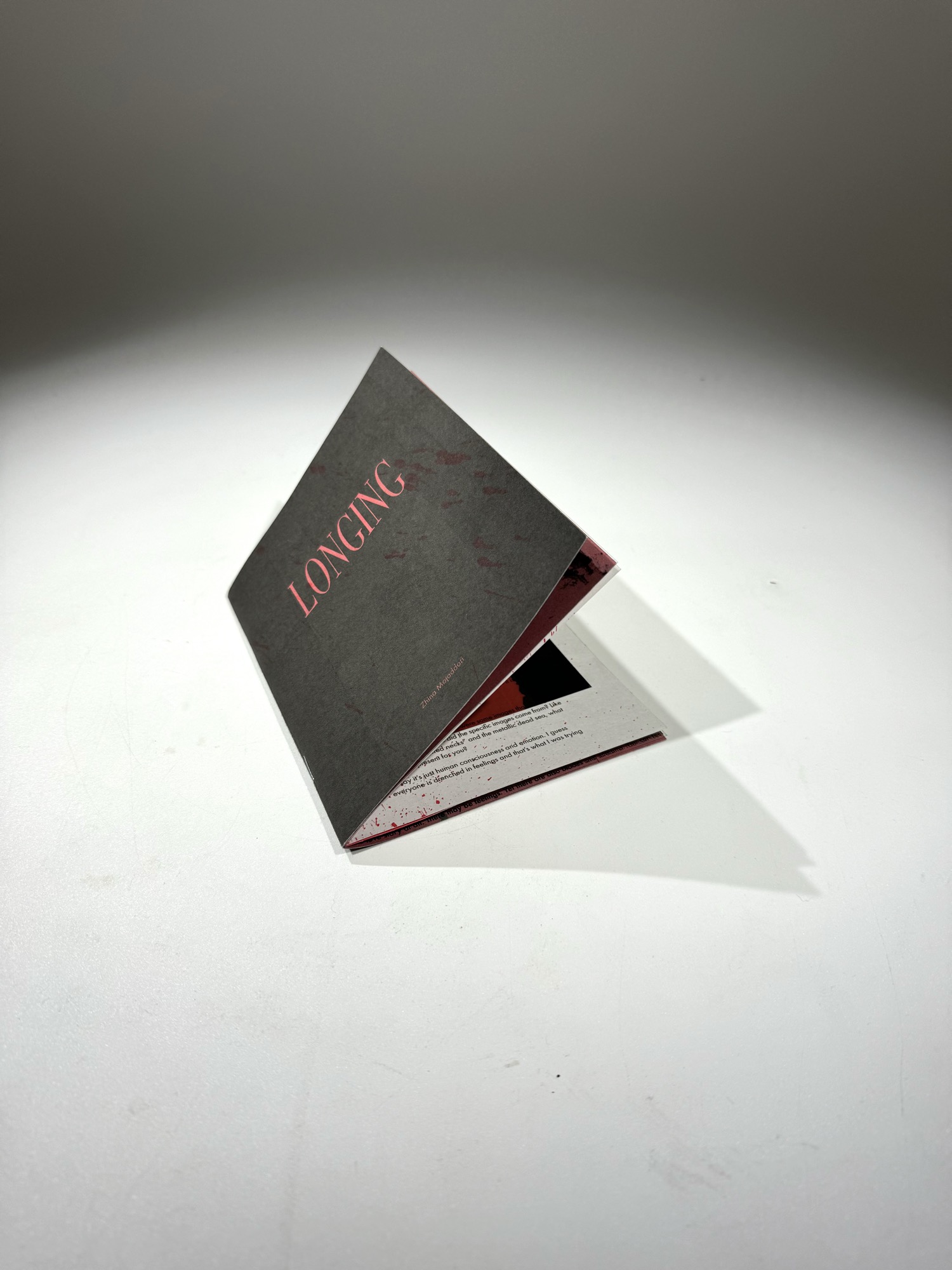
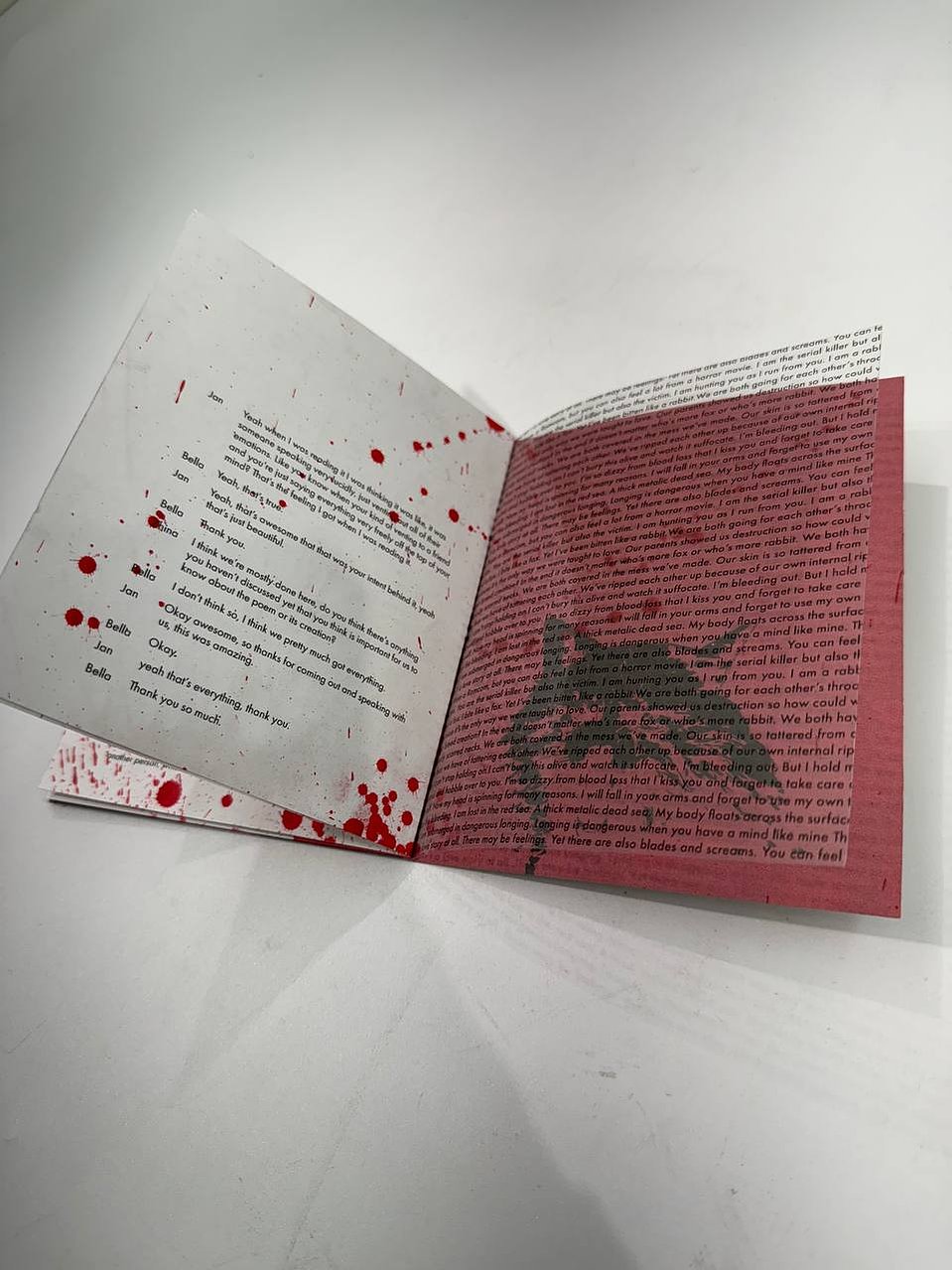
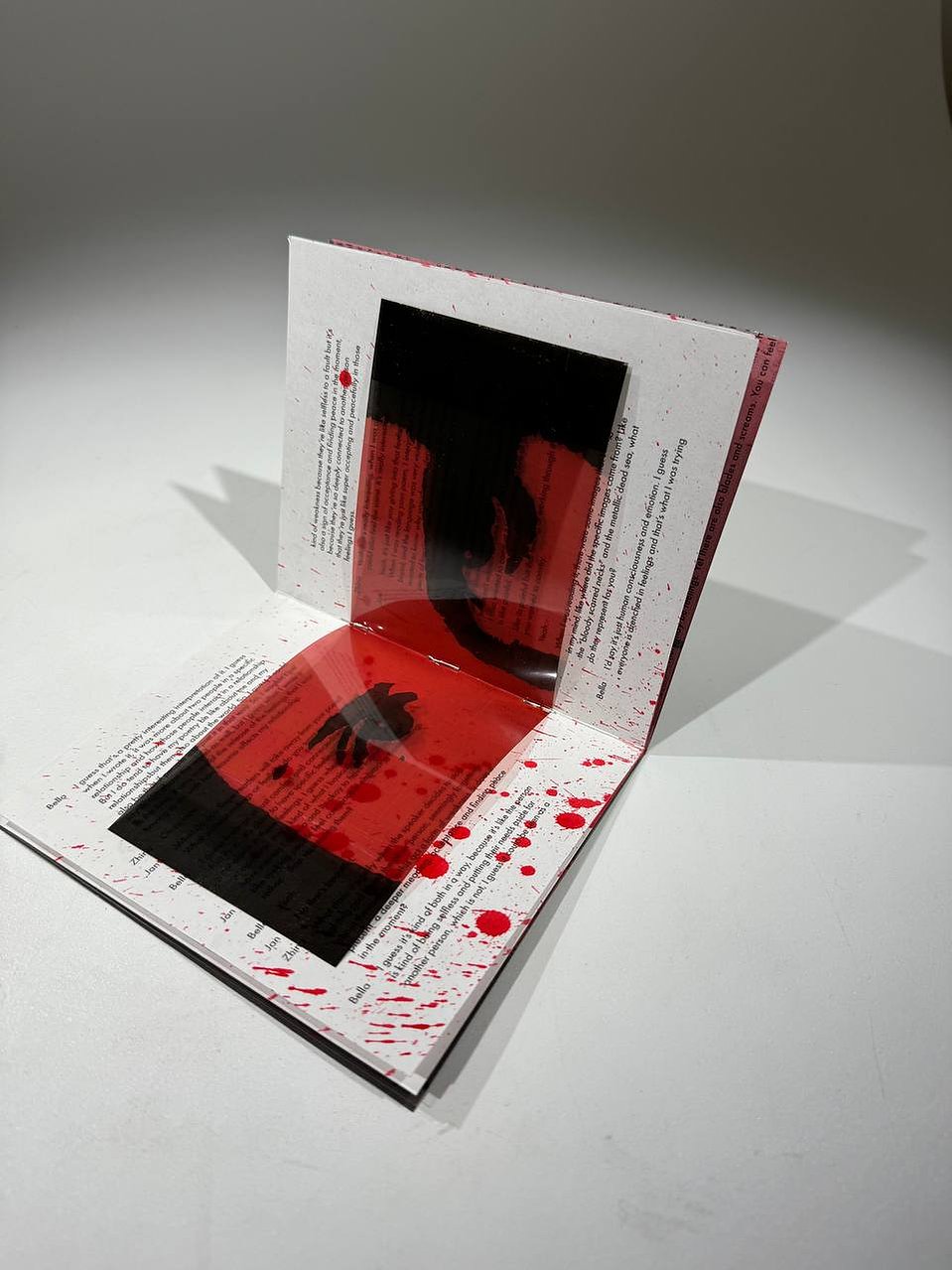
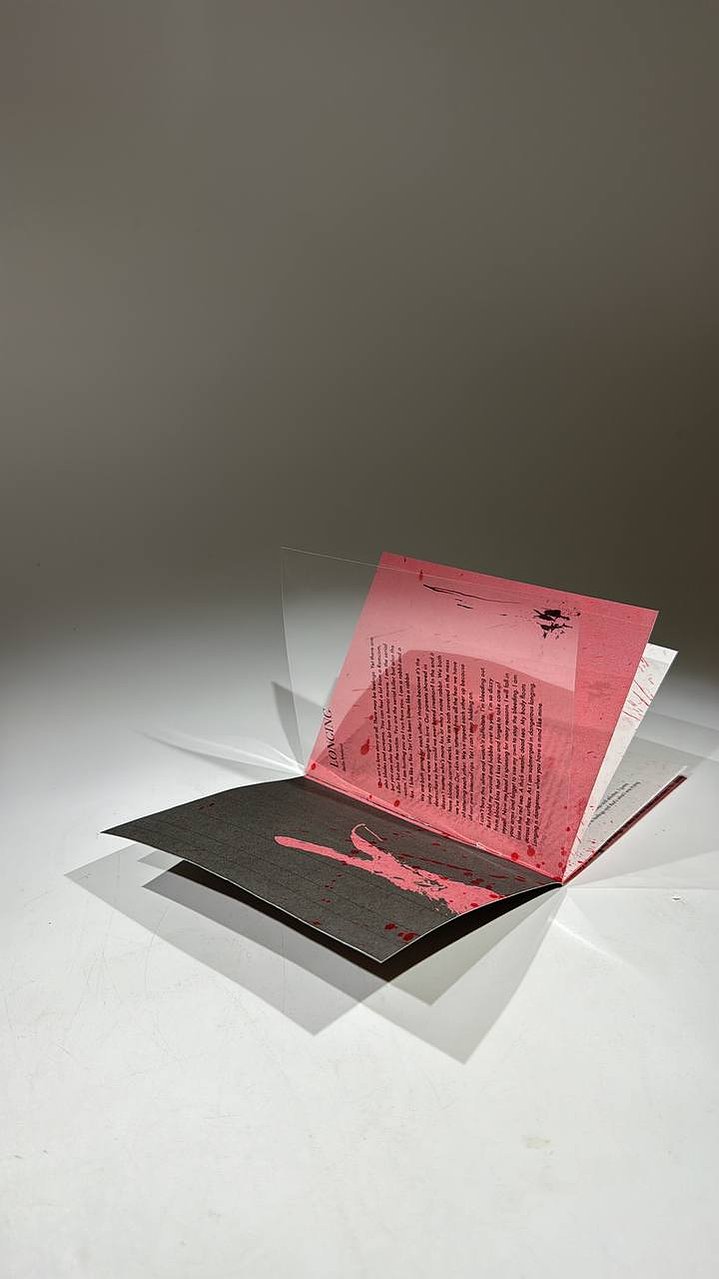
A booklet built around a poem about the violence and tenderness inside longing, tracing the predator and prey dynamic of a relationship that neither person knows how to leave.
Longing
This isn't a love story at all.
There may be feelings.
Yet there are also blades and screams.
You can feel a lot from a Romcom,
but you can also feel a lot from a horror movie.
I am the serial killer but also the victim.
You are the serial killer but also the victim.
I am hunting you as I run from you.
I am a rabbit and a fox.
I bite like a fox.
Yet I've been bitten like a rabbit.
We are both going for each other's throats
because it's the only way we were taught to love.
Our parents showed us destruction
so how could we ever breed creation?
In the end it doesn't matter who's more fox or who's more rabbit.
We both have bloody scarred necks.
We are both covered in the mess we've made.
Our skin is so tattered from all the fear we have of tattering each other.
We've ripped each other up because of our own internal rips.
Yet I can't stop holding on.
I can't bury this alive and watch it suffocate.
I'm bleeding out.
But I hold my wound and hobble over to you.
I'm so dizzy from blood loss that I kiss you
and forget to take care of myself.
Now my head is spinning for many reasons.
I will fall in your arms and forget to use my own to stop the bleeding.
I am lost in the red sea.
A thick metalic dead sea.
My body floats across the surface.
As I am submerged in dangerous longing.
Longing is dangerous when you have a mind like mine.
The first impression I get from the poem is that its tone feels both harsh and exhausted. It reads like a short story, beginning with a kind of briefing that sets the stage for what's about to happen. The imagery throughout is vivid and intense, portraying not just feelings of love but deeper emotional battles.
The language is raw, with words like "blades" and "screams" immediately pulling me into a darker, more violent setting. The middle section almost feels like a detailed explanation of this fight between two people, showing both victim and aggressor roles. By the time the poem reaches its conclusion, it feels like a descent into something final, as though the emotional chaos has drained all life from the speaker, ultimately ending in death, not necessarily physical, but a metaphorical one, where both parties are left scarred and broken.
For me, the poem evokes a strong feeling of betrayal. It's not a typical love poem; it feels like the opposite, love gone terribly wrong. The speaker seems to want something deeply, but also knows it's not good for them, creating a tension between desire and danger. There's a kind of self-destructive behavior happening, where the speaker and the other person are both hurting each other, maybe out of fear or learned patterns.
The line about "our parents showed us destruction" suggests that their relationship mirrors a cycle of trauma, where no one knows how to love healthily. What really stands out is the shift in tone and mood by the last paragraph. In the beginning, there's a sense of fighting, biting, and struggling. But toward the end, the speaker seems to surrender, almost as if they've given up or resigned themselves to the pain.
At the beginning of the poem, the speaker says "This isn't a love story at all," which immediately made me rethink what I was reading. The battle between the fox and the rabbit, the predator and prey dynamic, feels like a metaphor for modern existence. We're constantly chasing something, often hurting ourselves in the process, just trying to survive in a world that doesn't seem to care about our well-being.
The closing image of being lost in a "metallic dead sea" makes me think of how some people become numb or indifferent after so much struggle. It's like we reach a point where, instead of continuing to fight, we just give in. It makes me think of how people often struggle to break free but ultimately resign themselves to the endless loop of surviving and sacrificing their well-being.